
The Repair Map
The Full Framework That Takes You From Distance to Rebuilding Trust Without Guessing, Overreaching, or Killing Momentum.

What you need to know to open the door again. This kit shows you how.

Digital access only - nothing will be shipped. Your login arrives by email within minutes.
A step-by-step roadmap that shows you how to move beyond the first message, respond safely and rebuild the relationship
↓ Keep scrolling to see everything that's included. It's a lot - hope you're ready ↓
When parents follow a clear repair path, things begin to shift.


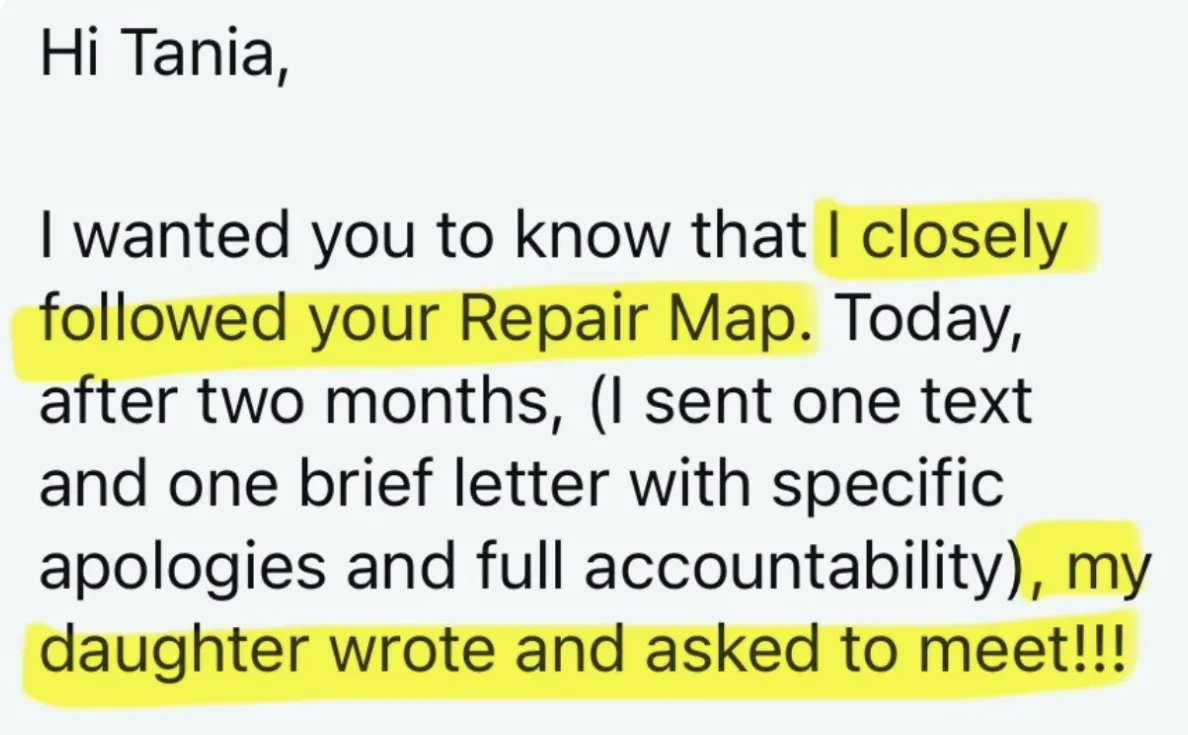
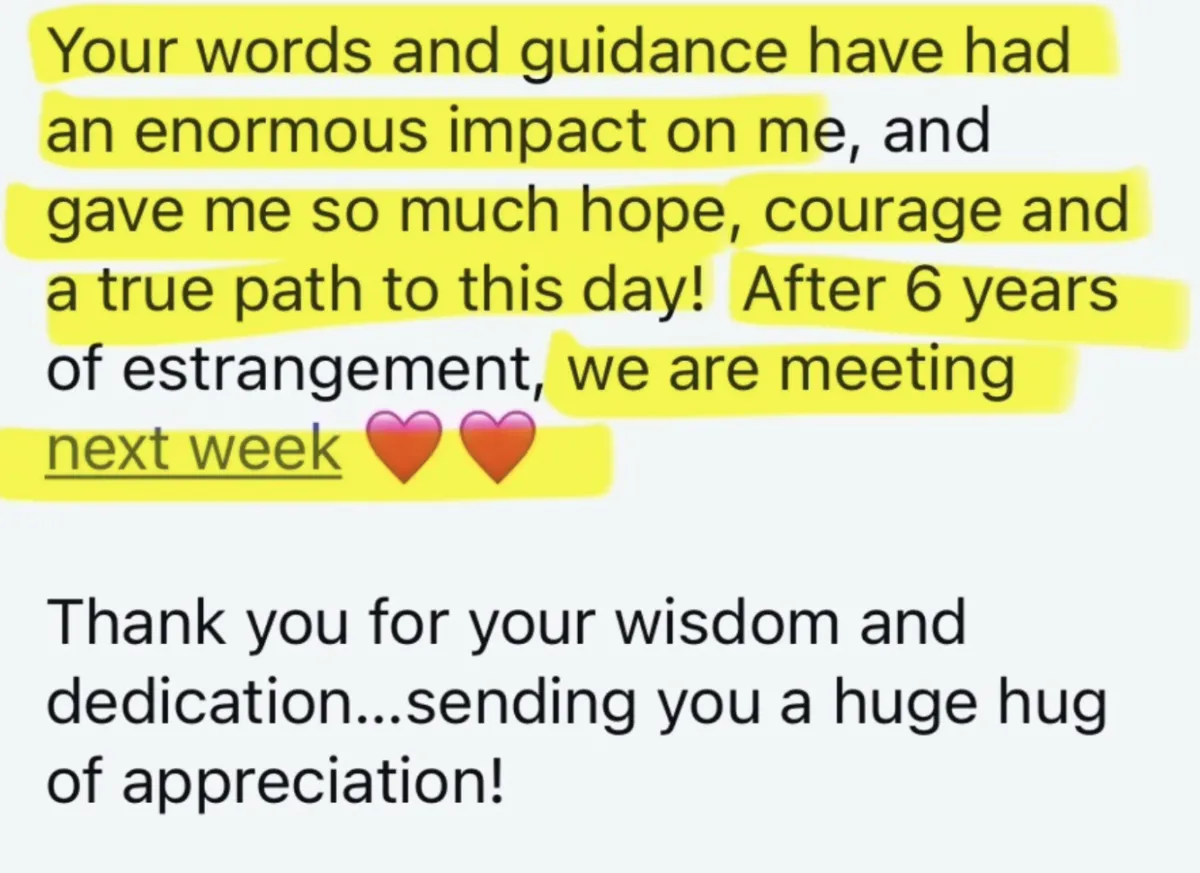
This Is What the Repair Map Gives You:
A clear way to move forward before and after contact so you’re not wondering if you just made things worse.
A grounded approach to silence, knowing when to wait, when to send something, and when doing nothing helps.
A simple way to track real progress even when change is slow or uneven.
Timing you can trust so you don’t rush moments that need space or pull back out of fear.
Clarity around the moves that stall repair like chasing, over-explaining, or trying to fix everything at once.
Understanding why the distance formed without blaming yourself or questioning your entire past.
A steady way to handle early contact so progress doesn’t quietly fall apart.
Confidence that you’re taking the right step without guessing, second-guessing, or reacting every time emotions rise.
A calm way to read short or distant replies so one word doesn’t throw you into panic or force a quick course change.
...and so much more!
↓ Keep scrolling to see everything that's included. ↓
Why this phase matters
(Whether contact hasn’t started or hasn’t moved yet)
Most parents who arrive here aren’t at the beginning.
They’re somewhere in between, and that’s where things feel most fragile.
Some haven’t reached out yet because they don’t want to disrupt what’s already delicate. Others have sent a message and are now navigating silence, short replies, or stalled momentum.
At this stage, progress doesn’t come from saying more or trying harder.
It comes from pacing, knowing how to move forward so contact can begin or continue without pressure.
This phase isn’t about opening the door for the first time.
It’s about creating the conditions that allow trust to grow, whether contact hasn’t started yet, or hasn’t moved forward.
This is the phase most parents don’t get guidance for, and exactly what the Repair Map was built to support.
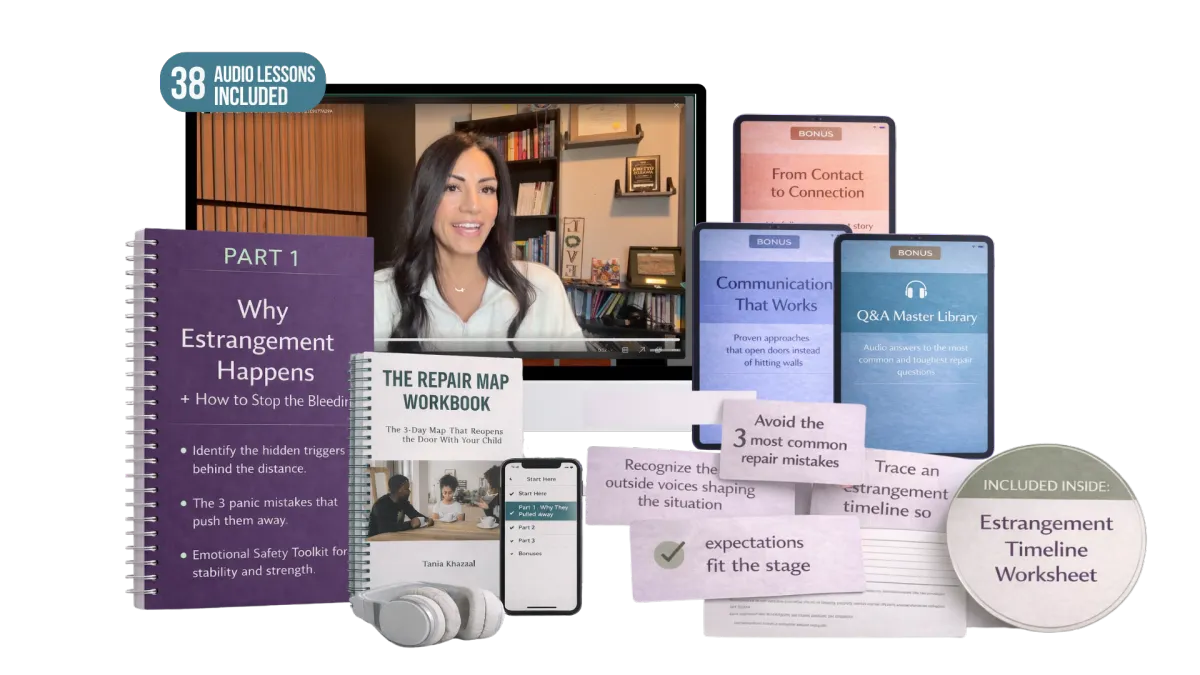
Digital access only - nothing will be shipped. Your login arrives by email within minutes.
Here’s How The Repair Map Guides You Forward
A clear, step-by-step framework designed to help you move from distance into rebuilding trust without pressure, panic, or overthinking
PART 1: Understanding Why They Pulled Away
(So you stop guessing and repairing from guilt)
A clear explanation of why the distance formed so you stop blaming yourself and start seeing patterns
Context around modern family dynamics and cultural messaging so shame and self-doubt don’t drive your choices
The 3 (+1) panic mistakes that quietly push adult children further away so you avoid slowing or reversing progress
An emotional safety toolkit to help you stay steady when emotions spike
Safe language principles so your words stay neutral and easier to receive
The estrangement timeline so your expectations match the stage you’re actually in
Faith-based grounding woven throughout, so patience guides your actions instead of urgency
PART 2: Creating Safe Contact (Structure + Timing)
(So contact can begin or continue, without pressure)
The Door Opener Blueprint so reaching out feels clear and intentional, not rushed or random
Insight into why estranged adult children hesitate or resist replies so silence doesn’t feel like rejection
Three simple rules for safe communication that protect early contact from emotional pressure (yes even if there is outside influence)
A structured messaging approach so you don’t improvise or overdo it
Clear timing and pacing guidance so you know when to pause, send, or wait
Faith anchoring for consistency when results take time
PART 3: Handling the First Response Without Killing Momentum
(So early progress doesn’t quietly fall apart)
Guidance for handling the first reply without panic so progress isn’t lost when communication begins
A clear way to understand what early replies usually mean so one word doesn’t throw you off
The most common traps that quietly stop momentum so replies don’t turn into dead ends
The Safe Reply Formula so your responses invite conversation instead of closing it
A progress-tracking approach that redefines wins so slow movement doesn’t lead to discouragement
Move forward with clarity, pacing, and steadiness, not guesswork.
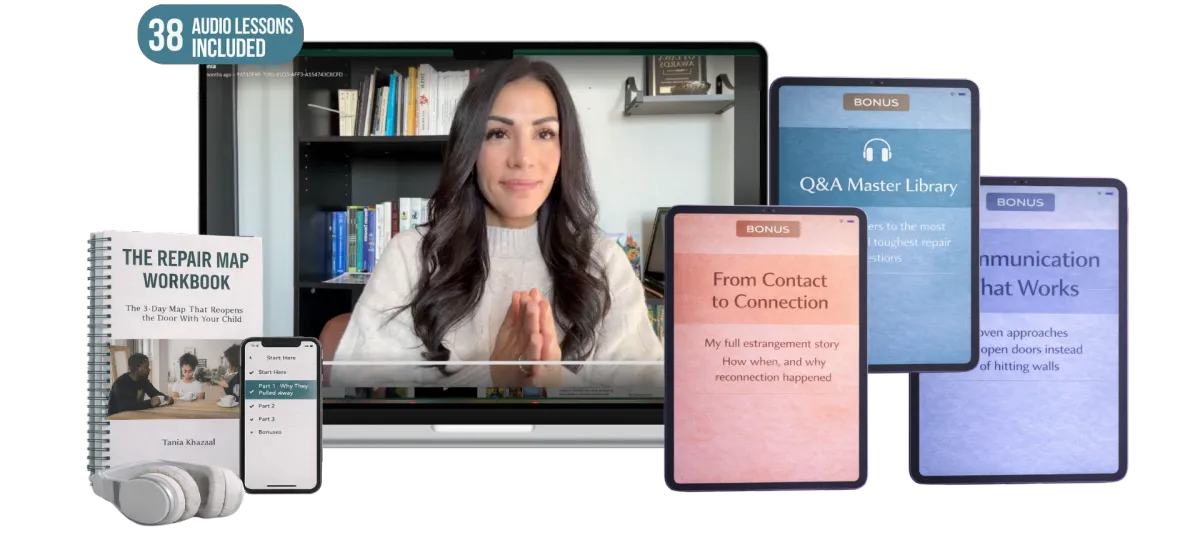
Digital access only - nothing will be shipped. Your login arrives by email within minutes.
The Repair Map is designed for real life, not perfect conditions.
It includes support for the real-life moments that come up during repair; real questions, real conversations and real examples on how repair unfolds over time.
Bonus #1: Dozens of Real-Life Q&A Support
(So you’re not left guessing when something unexpected happens)
Q&A audios answering the most common and difficult repair questions parents face
Guidance for situations that don’t fit neatly into a lesson, so you’re not frozen when something new comes up
Clear direction for real moments, helping you respond with steadiness instead of panic or second-guessing
Bonus #2: My Full Estrangement Story
(So you can see what repair actually looks like over time)
A complete walk-through of my own estrangement, from first contact to rebuilt connection
Real timing, setbacks, pauses, and progress, so expectations stay grounded and realistic
A lived example of how patience, pacing, and consistency create change without forcing outcomes
Bonus #3: Communication That Works Training
(So your words open doors instead of hitting walls)
Proven communication approaches designed specifically for fragile repair stages
Guidance on how to say less, not more, while still creating emotional safety
Support for keeping conversations open, neutral, and steady as trust rebuilds
Move forward with clarity, pacing, and steadiness, not guesswork.
Where You Are Right Now
Most parents who reach this point aren’t acting from panic. They’re exhausted from trying, carefully, and not knowing what’s actually helping.
You’ve apologized more times than you can count, with no real change.
You’ve explained yourself, taken accountability, and still feel misunderstood.
You’re trying not to overdo contact, but silence leaves you unsure what to do next.
When replies are short or slow, you don’t know whether to lean in or pull back.
You’re afraid that saying the wrong thing could undo what little progress there is.
You don’t want to reopen old wounds just to prove you care.
You’re tired of advice that tells you to “just wait” without any guidance.
You’re watching timing closely, but you’re not sure how to read it.
You want to move forward, but only in a way that feels respectful and safe.
If this feels like you, the Repair Map is designed to guide what comes next.
Want a sneak peak preview?
I recorded a short video to give you a snack peak inside the Repair Map!
Why I Built The Repair Map
I’ve lived in an estrangement, but from the other side.
I was the daughter who cut off my mother.
It came from hurt and years of unspoken pain, and while I thought it was the only way to protect myself, it left both of us broken.
But the story didn’t end there.
We overcame it.

I healed, I did the inner work, and step by step we found our way back to each other.
That’s how I know repair is possible, when there’s safety, understanding, and a clear plan.
Parents write to me every day saying, “I don’t know why my child cut me off… I’ve apologized a thousand times but nothing changes… I’m scared that if I reach out I’ll make it worse.”
I created the Repair Map because no parent should have to stay stuck in that spiral.
This is the exact blueprint I wish my mom had when we were disconnected, a step-by-step plan to understand why it happened, what to do about it, and how to rebuild trust without panic.
Repair isn’t easy, but it is possible. I’m living proof.
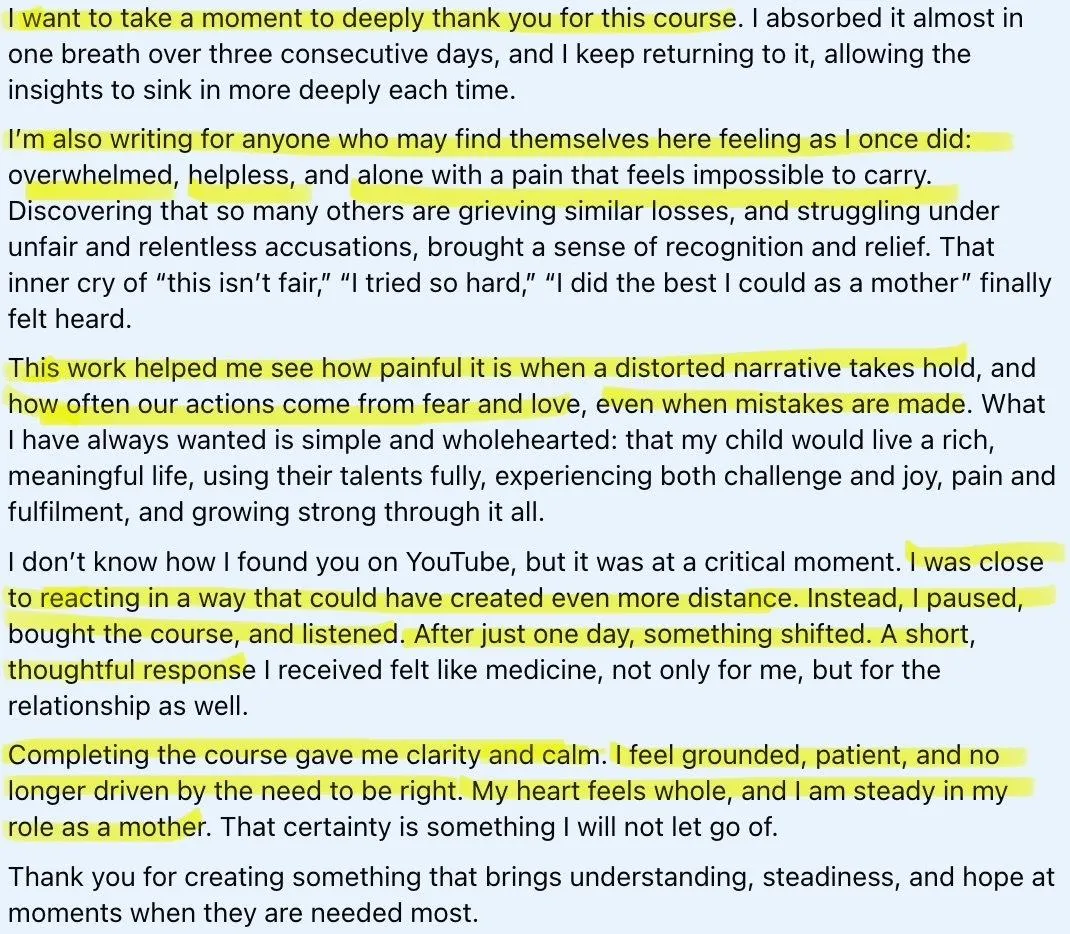
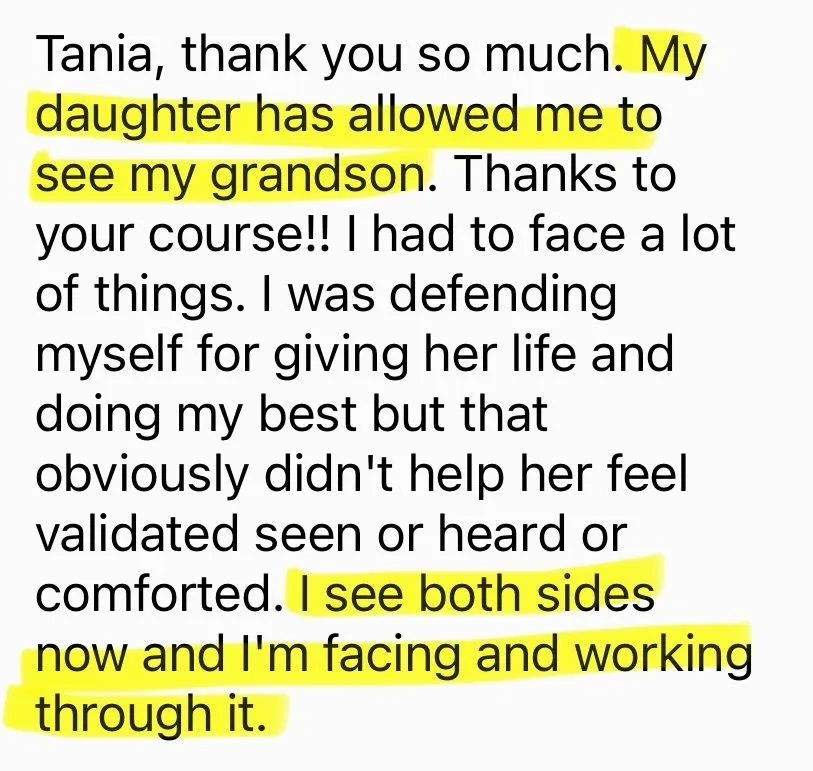
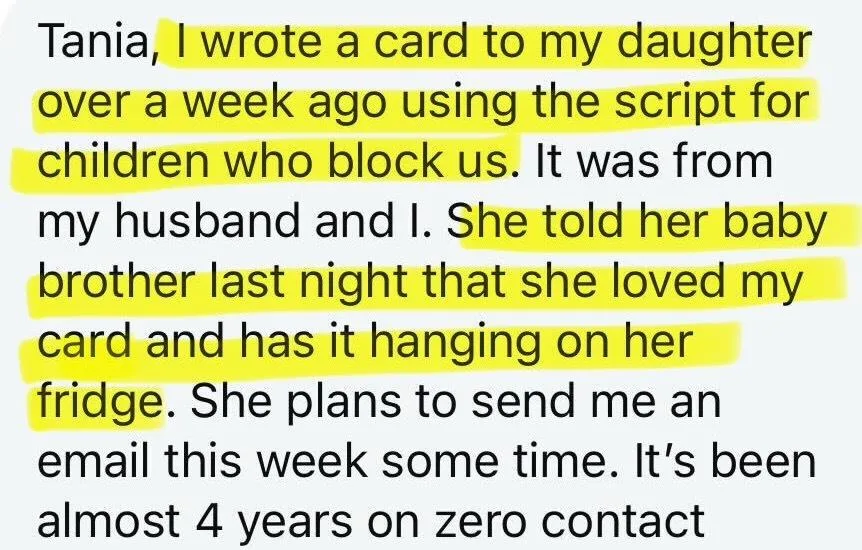
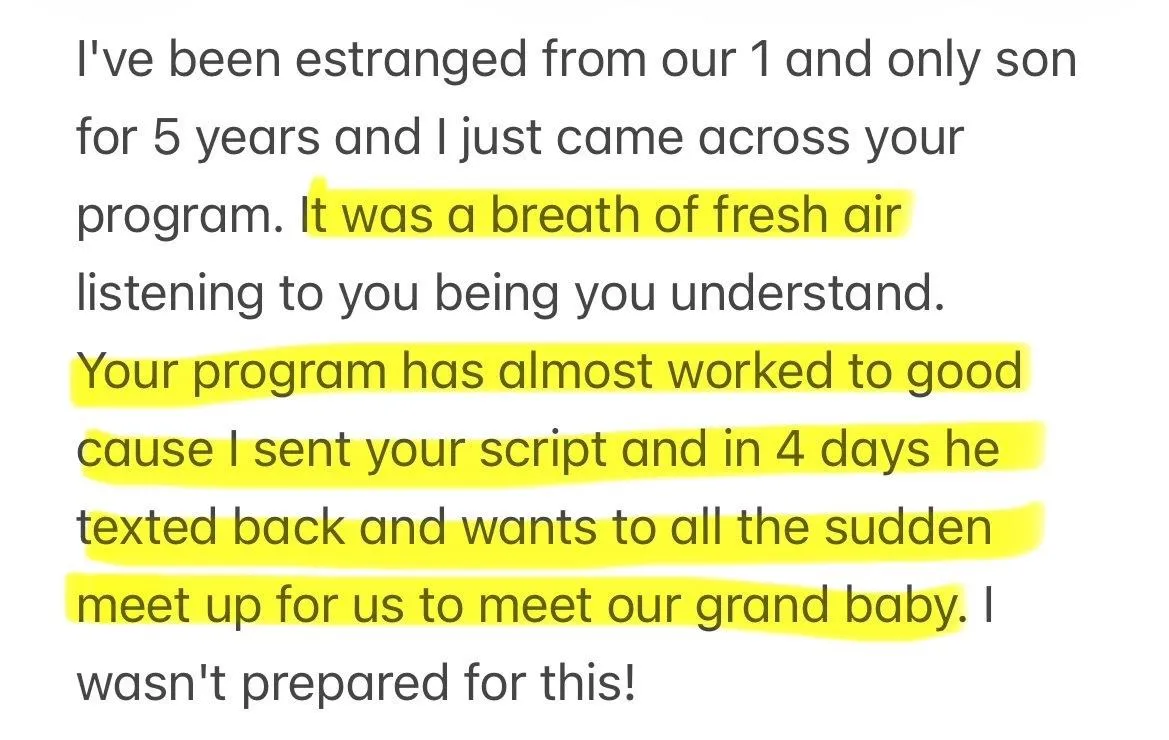
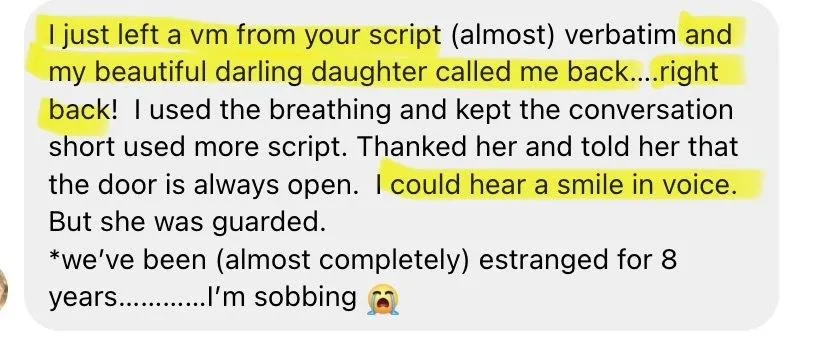
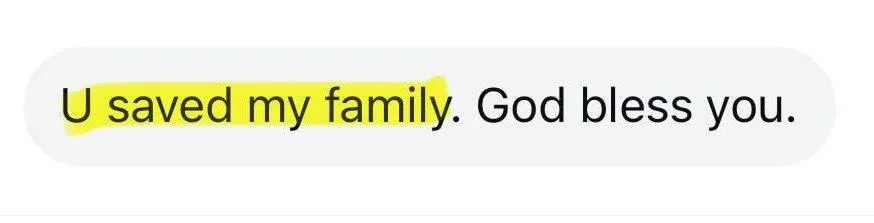
What Became Possible With The Repair Map
Frequently Asked Questions
How fast can I start?
Immediately. You’ll have instant access to all videos, audios, scripts, and tools as soon as you join, so you can begin at the pace that feels steady for you.
What if my child is still ignoring me?
The Repair Map shows you how to create safety even when there’s no reply yet. You’ll learn how to work with silence without chasing, panicking, or overcorrecting and how to know when a message supports progress versus when waiting is the wiser move.
What if the first reply is angry, cold, or distant?
This is one of the most fragile moments in repair, and it’s exactly what the Repair Map prepares you for. You’ll learn the Safe Reply Formula so you don’t react emotionally or shut the door unintentionally and instead respond in a way that keeps conversation possible.
What if I’ve already apologized over and over?
That doesn’t mean you failed, it means you care. The Repair Map helps you move beyond repeated apologies and into language that actually rebuilds trust, without reopening old wounds or putting emotional pressure on your child.
What if it’s been months… or even years?
That’s very common. The Repair Map was built specifically for parents navigating long periods of distance. You’ll learn how to work with the stage you’re in now, not where you wish you were so expectations, timing, and next steps stay aligned.
What if I’m blocked or have no way to contact them?
You’ll learn how to work with blocked or unavailable contact in a grounded, non-reactive way, including when to pause, when not to escalate, and how to prepare yourself so you don’t act from panic if contact becomes possible again. This is about readiness and steadiness, not forcing access.
Is this therapy or just mindset work?
No. The Repair Map is not therapy talk or “just give it time.” It’s a structured roadmap with clear guidance, scripts, and decision-making support so you know what to do and what not to do in real situations.
How long does it take to see progress?
Every relationship moves at its own pace. Some parents notice shifts quickly, even after the first carefully timed message. For others, progress is quieter and slower. The Repair Map helps you recognize real movement so you don’t give up or push too hard at the wrong moment.
What if I’m afraid of making things worse?
That fear is valid and it’s why this framework exists. The Repair Map is designed to reduce risk by helping you move with pacing, emotional safety, and structure, instead of acting from urgency or pressure.
Can I get support if I feel stuck?
Yes. Along with the core training, you’ll have access to dozens of real-life Q&A audios where I walk through common and complex repair scenarios so you’re not left guessing when something unexpected comes up.
Do I get lifetime access?
Yes. You’ll have lifetime access to every video, audio, script, tool, and bonus included in the Repair Map.
Is there a refund?
Because this is a digital program with immediate access to all materials, all sales are final. Please read through the page carefully to make sure this feels like the right support for where you are right now.
What if my child says they don’t want a relationship right now?
You’ll learn how to respond without arguing, pleading, or disappearing and how to stay positioned as emotionally safe over time, even when the answer isn’t what you hoped for yet.